Seat Belts & Child Safety
The simplest way to save lives. Proper restraints will protect everyone from infants to adults in every vehicle, on every journey. It's the law, and it works.
Child Safety: Using the Right Child Restraint System (CRS)
Children are not small adults. Their bodies are more vulnerable, and adult seat belts do not fit them properly, potentially causing serious injury in a crash. Child Restraint Systems (CRS), or car seats, are specifically designed to protect infants and children.
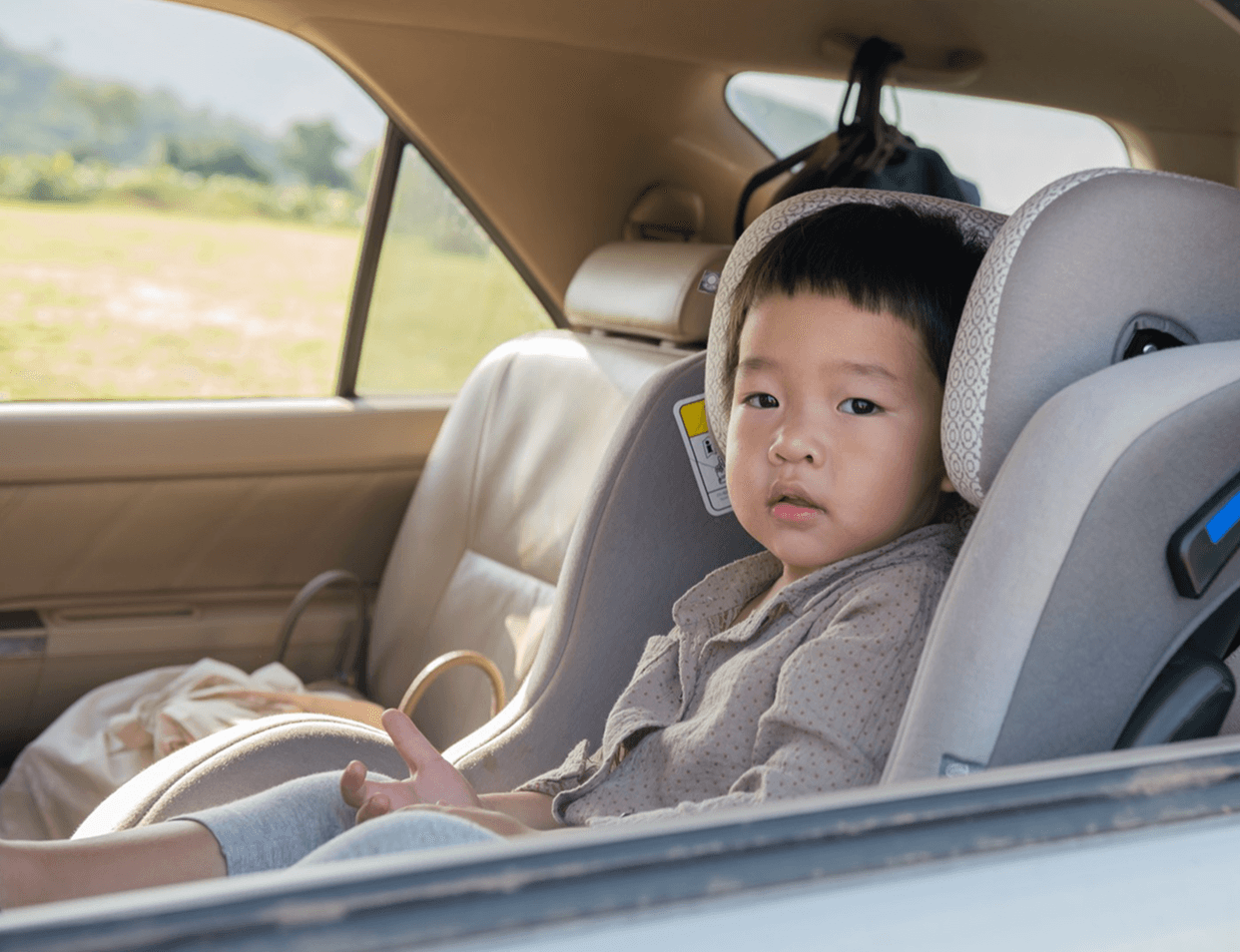
Why Children Need Car Seats
Keep your little ones safe with car seats provide the right fit, support, and protection that adult seat belts cannot.

Size Difference
Adult seat belts are designed for adult bodies and bone structures. On a child, the lap belt often rides up over the stomach, and the shoulder belt cuts across the neck, which can cause severe internal injuries in a crash.

Vulnerability
Children’s bones and organs are still developing and are more susceptible to injury.

Proper Protection
CRS positions the child correctly and distributes crash forces safely across their body.
Malaysian Law & Standards on Child Restraint Systems (CRS)
Ensuring every child rides safely and meets legal safety standards.

Mandatory Use of CRS for Children Under 135 cm
Effective January 1, 2020, it is mandatory for children under the height of 135 cm to use an appropriate CRS when travelling in private vehicles, as per the Motor Vehicles (Safety Seatbelts) (Amendment) Rules 2019.

Approved Safety Standards for CRS
The CRS used must comply with United Nations safety standards ECE R44/04 or ECE R129 (also known as i-Size). Look for the certification label (often an orange ECE label or a QR code linking to JPJ/MIROS verification) on the car seat.
Choosing the Right Car Seat (Stages)
The correct seat depends on your child’s age, weight, and height. Always follow the manufacturer’s instructions for your specific car seat and your vehicle owner’s manual. General stages include:
- Stage 1: Rear-Facing Seats
- Stage 2: Forward-Facing Seats
- Stage 3: Booster Seats
- Stage 4: Vehicle Seat Belt
Proper Installation & Use
Proper installation and correct use of a car seat are crucial. Follow manuals carefully, secure straps snugly, and ensure every harness and belt is correctly positioned to keep your child safe on every journey.

Read the Manuals
Always refer to both the car seat manual and your vehicle owner’s manual.

Installation
- ISOFIX
If your car and car seat have ISOFIX anchors, this method can be easier and reduce installation errors. Ensure connectors are properly latched. - Seat Belt
If using the vehicle seat belt, route it correctly according to the car seat manual’s instructions and ensure it is locked tight (check for less than 1 inch (2.54 cm) of movement side-to-side or front-to-back at the belt path).

Harnessing (for seats with harnesses)
- Straps should be snug (you shouldn’t be able to pinch any slack vertically at the shoulder).
- Position the harness straps according to the manual (usually at or below shoulders for rear-facing, at or above for forward-facing).
- Ensure the chest clip (if present, common on some non-ECE standard seats but less so on ECE) is at armpit level.