Motorcycle Safety
Ride safe, always wear a helmet, stay visible, and follow traffic rules on Malaysia’s roads.
Motorcycle Safety in Malaysia: Ride Safely, Arrive Safely
Motorcyclists are a vital part of Malaysia’s roads, but face significant risks. National statistics highlight this vulnerability: in 2023, a concerning 69% of all road fatalities involved motorcyclists. This risk is particularly high for younger riders (15-24 years old) and has unfortunately been increasing in recent years, unlike fatalities involving cars.
Understanding these risks and adopting safe practices is crucial for every rider. MKJR is dedicated to improving motorcyclist safety through various initiatives, and this guide provides essential tips to help you stay safe.
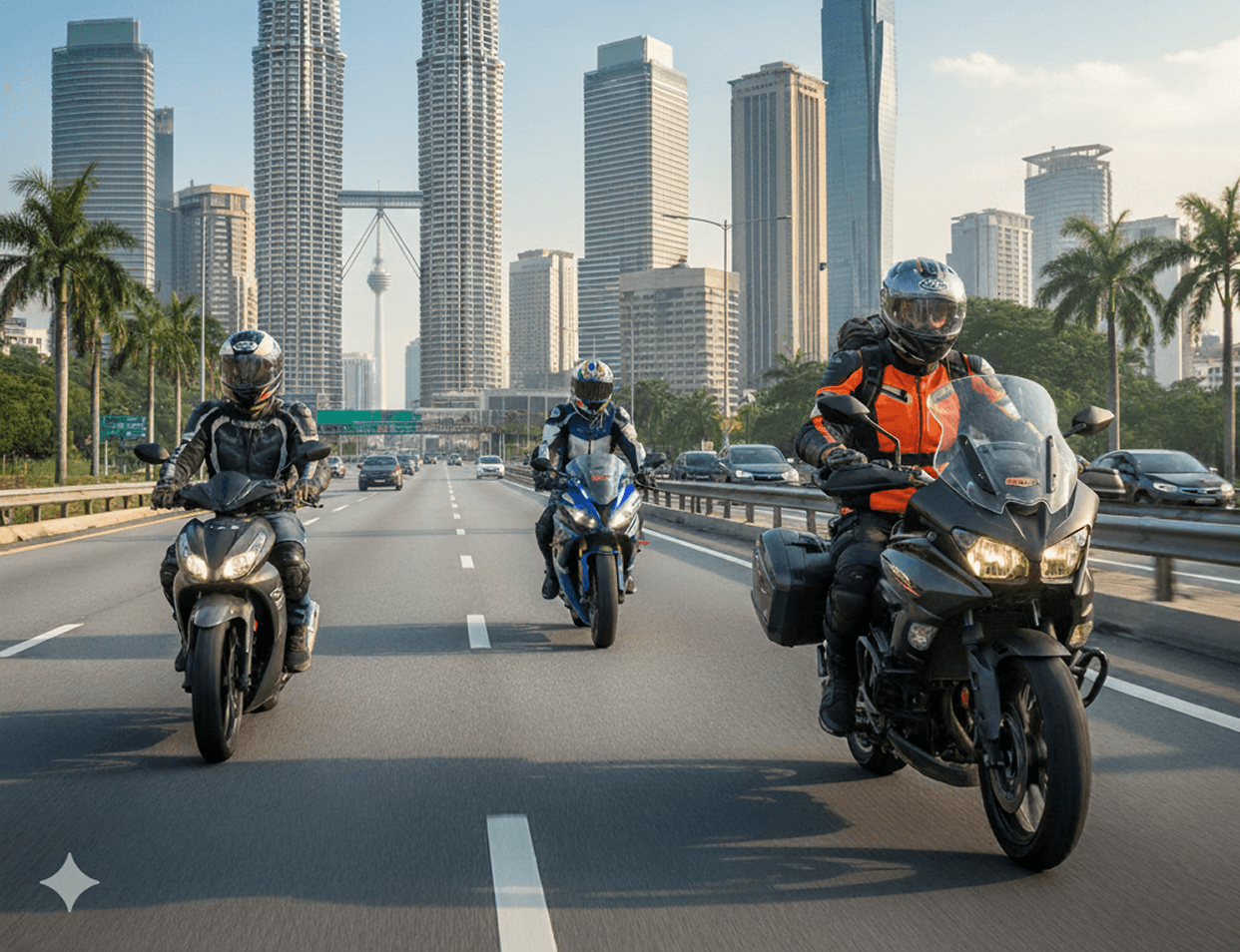
Helmets: Your Essential Lifesaver
Wearing a helmet properly is the single most effective thing you can do to protect yourself. Head injuries are a major cause of death and disability in motorcycle crashes.

It’s the Law
Wearing a SIRIM-certified helmet is mandatory for all riders and pillion passengers in Malaysia. Following this law greatly reduces the risk of severe head injuries in a crash.

Proven Protection
While no helmet guarantees survival in every crash, statistics show that not wearing one significantly increases the risk of death. Even among motorcyclist fatalities, a large percentage were not wearing helmets or wore them improperly. A certified, correctly worn helmet drastically reduces the risk of severe head trauma.

Choosing the Right Helmet
- Certification
Always choose a helmet with SIRIM certification sticker. - Fit
It should be snug and comfortable, without moving around easily on the head. - Type
Full-face helmets offer the best protection for both the head and face.

Wearing it Correctly
- Always fasten the chin strap securely. A loose helmet can come off during a crash.
- Position it level on your head, covering your forehead.

Maintenance
Replace your helmet after any significant impact, or typically every 5 years (materials degrade over time), or if the straps/padding are worn out.

Pillion Riders
The mandatory helmet law applies equally to all pillion riders (passengers). Never carry a passenger who is not wearing a helmet.

Child Helmets are Crucial
- Children are especially vulnerable.
- They must wear a helmet specifically designed and correctly sized for children. An adult helmet on a child will not provide adequate protection and may even come off in a crash.
- Ensure the child’s helmet is SIRIM-certified and securely fastened every single time.
Community Support for Safe Riding
MKJR, in collaboration with the Ministry of Transport (MOT), continuously promotes the importance of wearing certified helmets through nationwide awareness programmes. These initiatives include helmet education, safety demonstrations, and the distribution of approved helmets particularly to vulnerable groups and communities in need to ensure safer riding practices for all.
Be Seen, Be Safe: Maximise Your Visibility
Motorcycles are smaller and harder for other drivers to see. Taking steps to increase your visibility is critical, day and night.

Wear Bright & Reflective Gear
Choose brightly coloured jackets, vests, or helmets for daytime riding. At night, reflective materials on clothing, helmets, and the motorcycle itself are essential.

Use Your Headlights
Turn on your headlights even during the day (Daytime Running Lights – DRLs – if equipped) to make yourself more noticeable. Ensure taillights and brake lights are working correctly.

Lane Positioning
Ride where you are most likely to be seen. Avoid lingering in other vehicles’ blind spots (especially trucks and buses). Position yourself within the lane for optimal visibility at junctions and curves.

Use Signals Clearly
Signal your intentions (turns, lane changes) well in advance using indicators. Hand signals can supplement these if needed.
Ride Defensively: Anticipate and React
Defensive riding means actively anticipating potential hazards and assuming other road users might not see you or might make mistakes.

Scan Constantly
Keep your eyes moving, scanning the road ahead, to the sides, and checking mirrors frequently. Look far ahead to anticipate potential problems.

Maintain a Safe Cushion
Keep a safe following distance (at least 2–4 seconds) from the vehicle ahead. Increase this distance in bad weather or poor visibility. Also maintain space to your sides.

Be Extra Cautious at Junctions
Intersections are high-risk areas. Approach cautiously, anticipate drivers turning unexpectedly, and try to make eye contact if possible.

Watch for Road Hazards
Be alert for potholes, oil spills, loose gravel, wet leaves, railway tracks, and other surface irregularities that can easily destabilize a motorcycle.

Cover Your Brakes
Stay ready to react by keeping your fingers lightly on the brake levers, especially in traffic or risky situations, and ride as if other drivers can’t see you to better anticipate potential hazards.
Scan Constantly
Keep your eyes moving, scanning the road ahead, to the sides, and checking mirrors frequently. Look far ahead to anticipate potential problems.
Maintain a Safe Cushion
Keep a safe following distance (at least 2–4 seconds) from the vehicle ahead. Increase this distance in bad weather or poor visibility. Also maintain space to your sides.
Be Extra Cautious at Junctions
Intersections are high-risk areas. Approach cautiously, anticipate drivers turning unexpectedly, and try to make eye contact if possible.
Watch for Road Hazards
Be alert for potholes, oil spills, loose gravel, wet leaves, railway tracks, and other surface irregularities that can easily destabilize a motorcycle.
Cover Your Brakes
Stay ready to react by keeping your fingers lightly on the brake levers, especially in traffic or risky situations, and ride as if other drivers can’t see you to better anticipate potential hazards.
Essential Safe Riding Practices & Laws
Ride smart, ride safe. Follow the rules, stay focused, maintain your bike, and carry passengers responsibly to protect yourself and others on the road.

Obey Speed Limits
Speed dramatically increases risk and reduces reaction time. Adjust your speed according to road, traffic, and weather conditions.

Avoid Risky Maneuvers
Do not weave between traffic lanes unnecessarily. Avoid reckless overtaking or sudden lane changes, and exercise extreme caution if lane splitting/filtering is legal in your area.

Never Ride Impaired
Do not ride under the influence of alcohol, drugs, or medication that affects your abilities. Fatigue also impairs judgment. Always ensure you are alert and well-rested.

Stay Focused
Avoid distractions like using mobile phones while riding. Full attention on the road and your surroundings is essential.

Maintain Your Motorcycle
Regularly check tires (pressure and tread), brakes, lights, signals, chain, and fluid levels. A well-maintained bike is a safer bike and reduces the risk of mechanical failure.

Licensing & Documentation
Ensure you have the correct motorcycle license (B2, B full) and that your road tax and insurance are valid. Riding legally protects you and others on the road.

Carrying Passengers Safely
- One Pillion Only
Motorcycles are designed for one rider and usually only one passenger. Carrying more is illegal, unsafe, and affects balance, braking, and control - Never Carry Passengers in Front
Placing a passenger, especially a child, in front of the rider is illegal and extremely dangerous. It blocks your view and control, offers zero protection, and puts them at high risk in a crash. - Ensure Pillion Readiness
Make sure passengers can sit securely (reach footpegs), hold on firmly (to you or grab rails), and understand safety basics (lean with rider, hold on during acceleration/braking, keep feet on pegs).
Sharing the Road: A Note for All Drivers
Road safety is a shared responsibility. Drivers of cars and larger vehicles can help keep motorcyclists safe:

Look Twice, Save a Life
Motorcyclists can be hard to see. Take an extra moment to look specifically for them before turning, changing lanes, or pulling out from junctions.

Check Blind Spots
Always perform physical head checks for motorcycles in your blind spots.

Give Them Space
Provide motorcyclists with a full lane width. Don’t tailgate them, as they may need to stop more quickly than cars.
Anticipate
Understand that motorcyclists may need to react differently to road hazards.